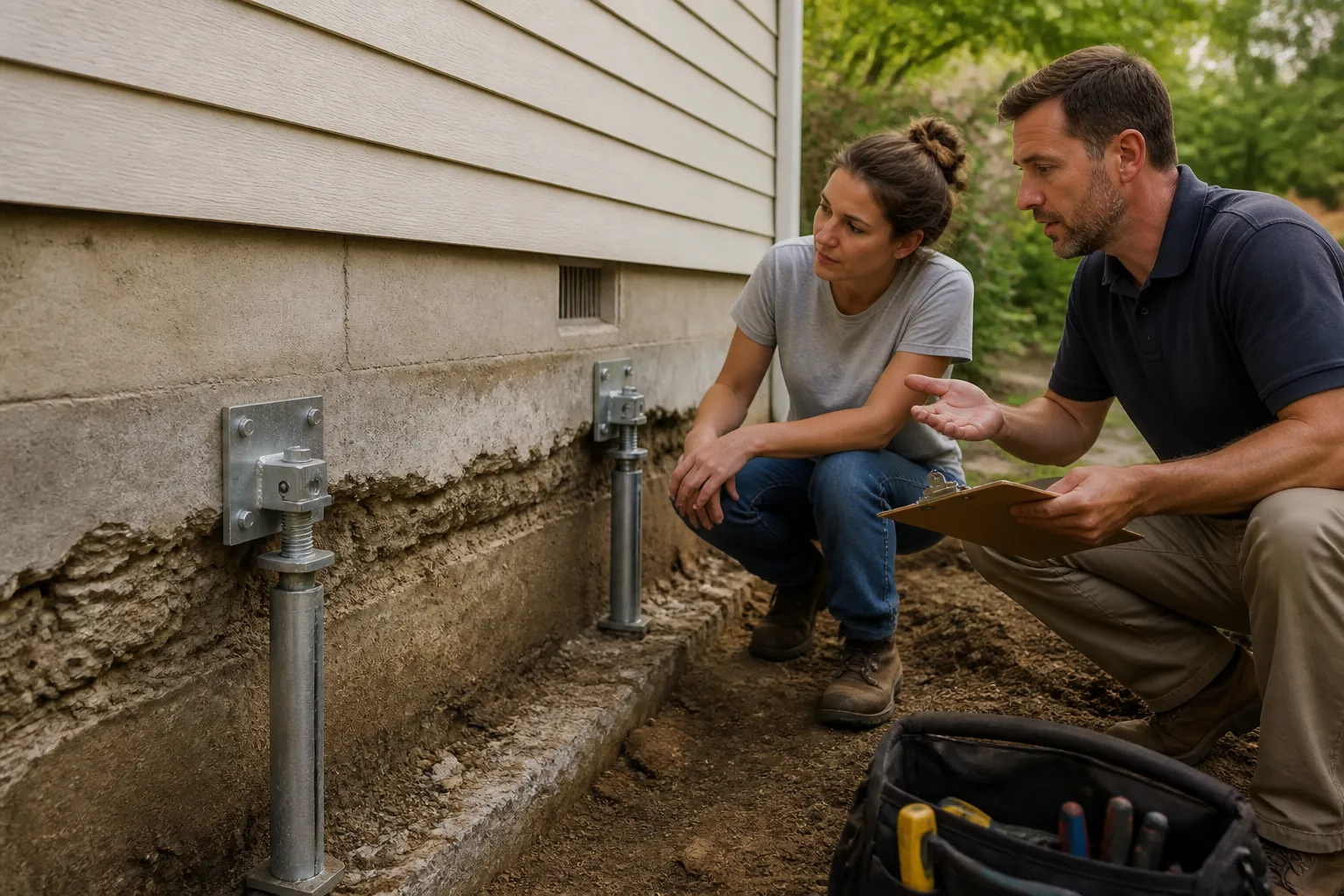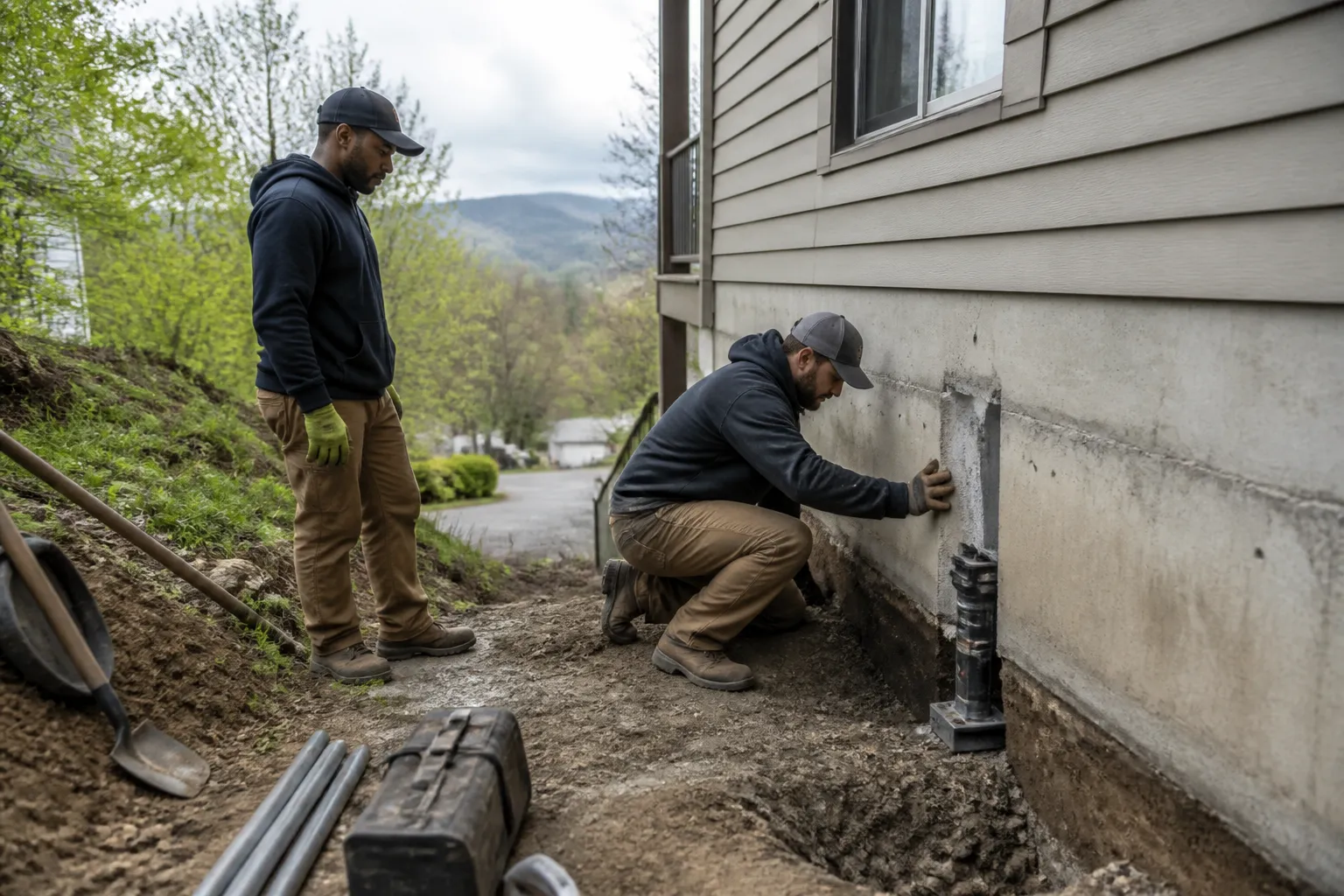
A wet crawl space is one of the most common calls Asheville Solid Foundation Repair gets in the Asheville area. The water you see is often a symptom. To fix it for good, you need to know where it comes from.
Asheville receives close to 50 inches of rain a year, and many homes sit on slopes. Those two facts explain a lot of wet crawl spaces in the mountains.
Rain and surface water
Water from roofs and yards can flow toward the house. If gutters overflow, downspouts empty near the wall, or the yard slopes toward the foundation, water can seep through the wall or under it into the crawl space.
Groundwater and springs
Some lots sit above a high water table or near small springs. After long rain, groundwater can rise and enter through the soil floor or the base of the wall. A drain system and a sump pump are common ways to move that water out.
Plumbing leaks
A dripping supply line or a leaking drain pipe can soak crawl space soil in one spot. Look for water that stays even in dry weather. A plumber can test the lines.
Humid air
In summer, warm and moist air enters a vented crawl space and meets cool surfaces. Moisture then condenses on pipes, ducts, and beams. This can make a crawl space damp without any standing water at all.
What damp does to your home
Wet crawl spaces can rot beams and sub-floors, soak insulation, and grow mold. Moisture can also draw pests. In time, floors can sag and the air in the house can smell musty.
Fixes that work
The right fix depends on the cause.
- Crawl space waterproofing with drains and a sump pump for water that enters
- Vapor barrier on the ground to block moisture from the soil
- Crawl space encapsulation to seal the space from outside air
- Gutter, downspout, and grading fixes to keep roof and yard water away
- Crawl space repair for damaged beams, posts, and floors
Steps you can take today
Check gutters and downspouts. Make sure soil slopes away from the house. Look for dripping pipes. Take photos of any water, and note how long it stays after rain. These notes help us diagnose the cause.
How we find the cause
A good inspection looks at the outside first. We check the roof drainage, the slope of the yard, and the condition of vents. Then we go into the crawl space and look at the soil, the walls, the pipes, and the beams. Water marks on the wall show how high water has risen. Rust on metal and white stains on concrete show repeated wetting.
Common mistakes
Closing the vents and doing nothing else can trap moisture. Laying a thin plastic sheet on wet soil without drainage can hide the problem. Spraying mold without fixing the water brings it back. The fix should always include a plan for where the water goes.
What to expect from a visit
Asheville Solid Foundation Repair walks the outside, enters the crawl space when it is safe, and takes photos. We explain what we saw, what is urgent, and what can wait. You decide what comes next.
When to call
Call if water stands for more than a day, if you smell mold, or if floors feel soft. Asheville Solid Foundation Repair offers a free first inspection in Asheville, Weaverville, Black Mountain, Fletcher, and nearby towns.
A simple year-round checklist
Asheville has real seasons, so a wet crawl space can have different causes at different times of year. Here is a quick way to stay ahead of it.
- Winter: Asheville averages about 10 inches of snow a year. Watch for melt pooling near the foundation, and keep pipes insulated.
- Spring: Check gutters and downspouts after the first heavy rains, and look inside the crawl space for damp soil.
- Summer: Warm, humid air can condense on cool surfaces under the house. Check for musty smells and sweating ducts.
- Fall: Clear leaves from gutters and yard drains before the wet season starts.
When a wet crawl space turns into a bigger problem
Long-term dampness can soften floor framing, feed mold, and pull heat out of your floors. If you notice cold floors, higher energy bills, or a smell that comes up through the vents, the crawl space may be the cause.
Related links
- Crawl space waterproofing
- Crawl space encapsulation
- Crawl space vapor barrier
- Fletcher
- Arden
- Woodfin
- Basement waterproofing guide
Have a wet crawl space? Call Asheville Solid Foundation Repair at +1-828-393-0465 for a free inspection.