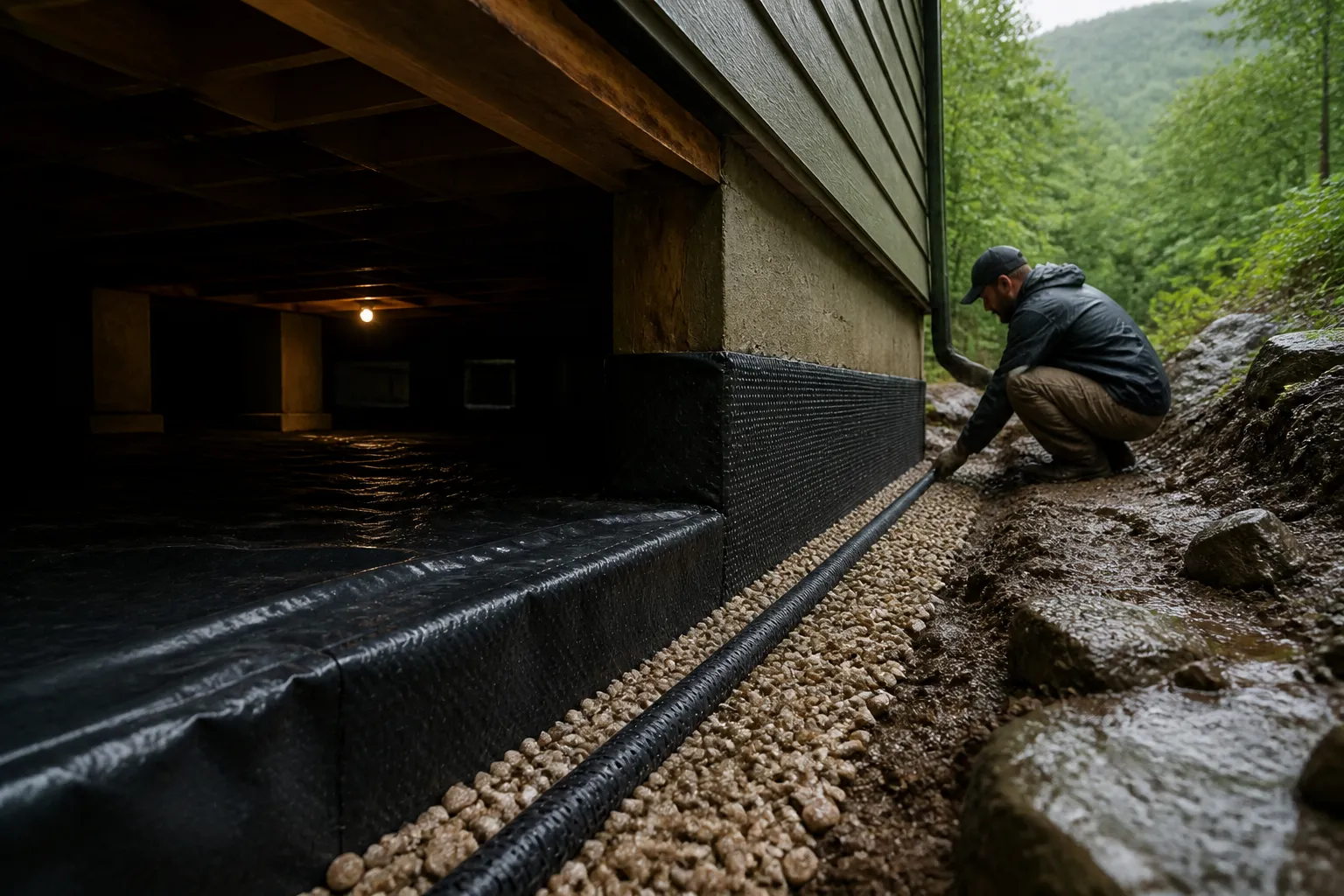
Musty odors, damp insulation, soft wood, and standing water under the home are all signs your crawl space needs attention. If moisture keeps returning after a rain or the air feels heavy beneath the house, the problem is usually deeper than a surface puddle.
Asheville Solid Foundation Repair helps homeowners identify where crawl space water is coming from and choose a waterproofing solution that fits the condition of the property. If you have noticed sagging floors, humidity, visible mold, or wood that feels wet to the touch, we can inspect the space and recommend a practical next step.
Crawl space water problems often start small, then spread to other parts of the home. A damp floor system can affect comfort, indoor air quality, and the materials supporting the structure. The sooner the source is found, the easier it is to limit damage.
These signs do not always mean the same repair is needed, but they do point to a moisture problem that should be assessed before it affects more of the structure.
A crawl space can take on water through several paths, and each one calls for a different solution. That is why we start by looking at the space as a whole rather than treating one symptom at a time. Asheville Solid Foundation Repair checks for the conditions that are allowing water or humidity to collect beneath the home.
Water may be entering from around the foundation walls or through low points in the crawl space floor. If the ground slopes toward the home or water has nowhere to move away from the structure, moisture can gather and stay there.
Even without standing water, exposed soil can release moisture into the crawl space air. That moisture can raise humidity, feed mold growth, and keep wood materials damp over time.
Water can move through foundation walls and show up as staining, damp spots, or visible leaks. If the wall is allowing water through, a vapor barrier alone will not solve the issue.
We focus on crawl space waterproofing that matches the actual condition of the home. Some spaces need a vapor barrier and encapsulation. Others need basement waterproofing, foundation waterproofing, or crawl space repair first so the water source is addressed before materials are installed.
This process keeps the work practical. Instead of covering up symptoms, we aim to reduce the conditions that cause them.
Not every crawl space needs the same level of treatment. The right fix depends on how much water is entering, how the space is built, and whether the goal is moisture reduction, structural protection, or both.
Encapsulation helps isolate the crawl space from outside moisture by sealing exposed surfaces and creating a cleaner, drier environment. This is often considered when humidity and vapor are constant concerns.
A vapor barrier covers exposed ground to reduce moisture rising from the soil. It is an important part of many crawl space waterproofing projects, especially when damp air is coming from below rather than from a visible leak.
When water is moving through foundation walls or affecting connected spaces, foundation waterproofing or basement waterproofing may be part of the solution. The right combination depends on where the moisture begins and how it travels.
If the crawl space already shows damage from long-term moisture, repair work may be needed before or alongside waterproofing. That can include attention to damaged materials or conditions that are affecting the floor system above.
Homeowners often wait until the crawl space is visibly wet before calling for help, but moisture can create problems long before water is obvious. Crawl space waterproofing can reduce the conditions that lead to more expensive repairs later.
These improvements are not about cosmetic cleanup. They protect the underside of the home, where hidden moisture can do quiet damage for a long time.
Before a crawl space waterproofing visit, a few simple steps can make the inspection easier and help us see the problem clearly.
Those details help connect what you see inside the house to what is happening under it. That often leads to a clearer repair plan.
Homes in Asheville can have crawl spaces that need more than a quick surface fix. We work with homeowners who are dealing with moisture, settlement-related concerns, and water intrusion that affects the structure from below. Asheville Solid Foundation Repair serves properties at 81 Broadway St Ste 201 and helps homeowners make sense of what the crawl space is telling them.
Some crawl spaces need vapor management. Others need slab foundation repair, foundation leveling, or concrete repair elsewhere on the property before the moisture issue is fully under control. If the crawl space is part of a larger foundation problem, we look at the whole picture so the repair plan matches the condition of the home.
Look for standing water, damp insulation, musty odors, soft wood, or visible condensation. If these signs keep returning, the crawl space likely needs a closer inspection.
No. A vapor barrier can reduce ground moisture, but wall seepage, standing water, or structural damage may need additional crawl space waterproofing or repair work.
Yes. Moisture below the house can contribute to sagging, uneven, or bouncy floors, especially when support materials stay damp for long periods.
Encapsulation is one way to manage moisture by sealing the crawl space environment. Waterproofing is the broader approach, which may include encapsulation, vapor barriers, foundation waterproofing, or other repairs.
Not always. Some spaces mainly need moisture control, while others already have damaged wood, insulation, or structural concerns that should be addressed as part of the project.
Yes. We can evaluate whether the crawl space problem is connected to foundation movement, wall seepage, or other structural concerns, then recommend the right service path.
If your crawl space smells damp, feels humid, or shows signs of water entry, it is worth having it checked before the damage spreads. Asheville Solid Foundation Repair can inspect the space, explain what is causing the moisture, and recommend a crawl space waterproofing solution that fits the property.
Call +18283930465 to discuss crawl space waterproofing for your Asheville home and get a clear plan for the next step.
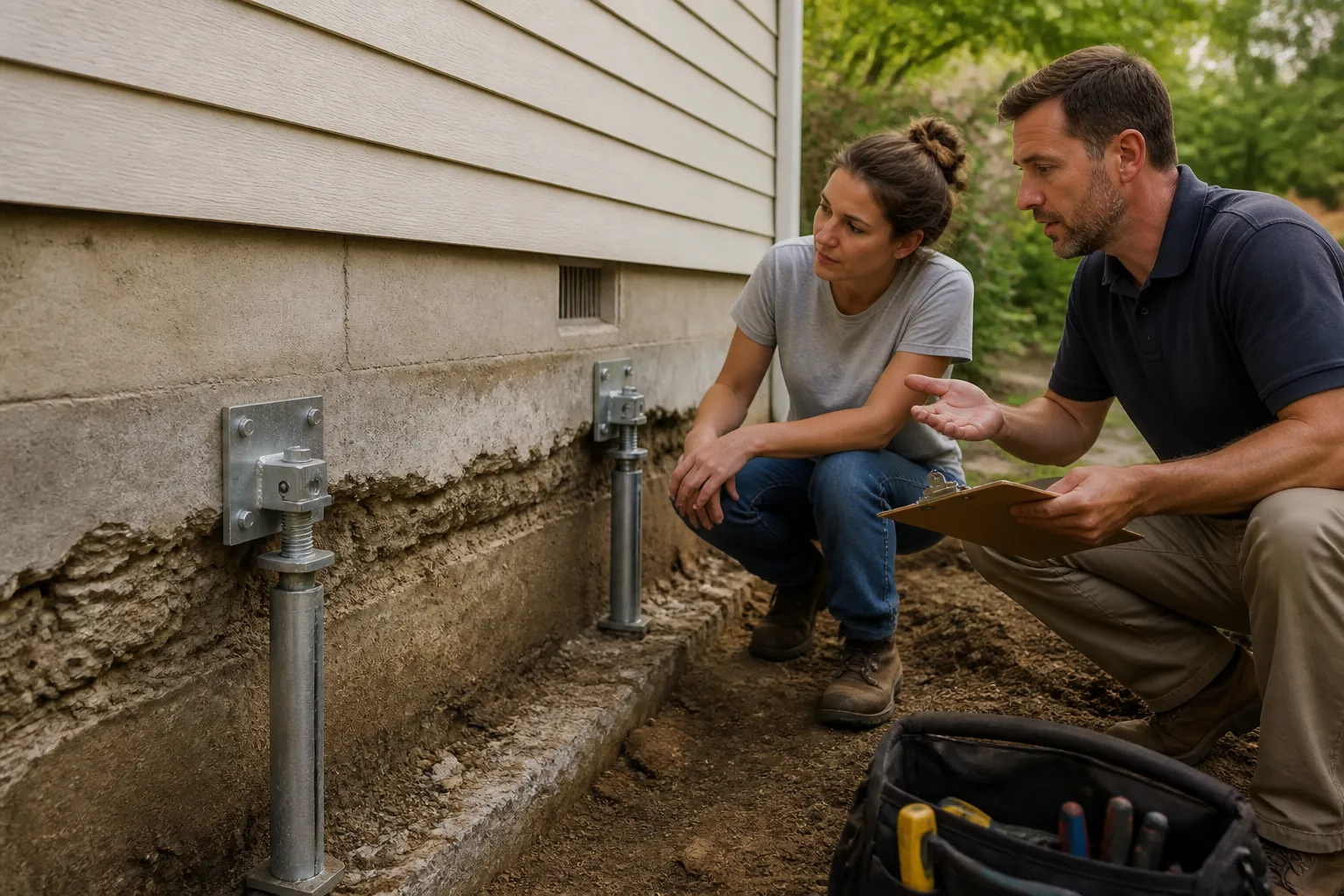
Get Started
Tell us what you are seeing, whether it is a crack, sagging floor, crawl space moisture, or basement water. We will help you understand what may be causing the issue and the next step that makes sense for your property.