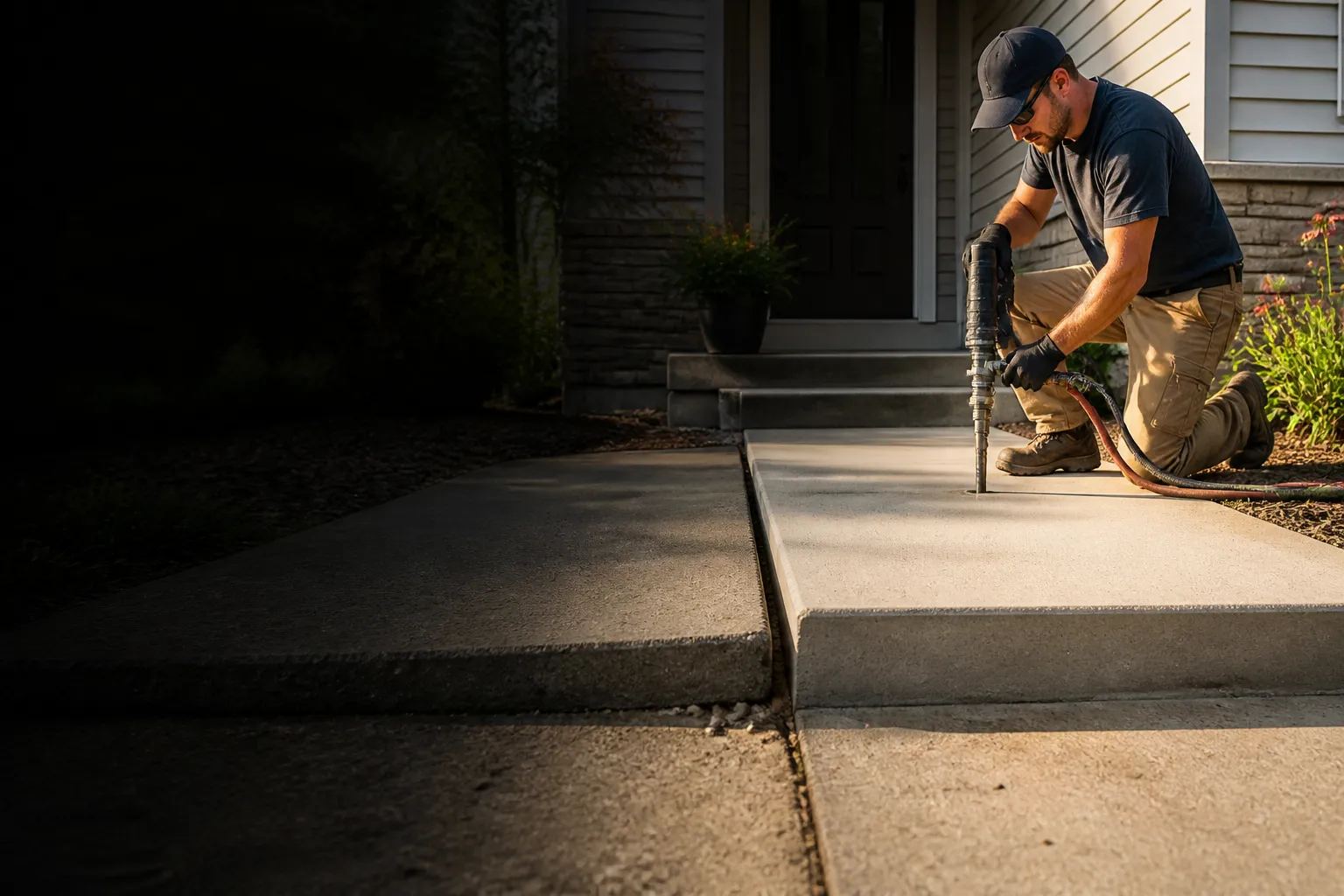
Uneven concrete can turn a simple walk across a driveway, sidewalk, or patio into a daily annoyance. If one side has settled, a slab edge is lifting, or a section rocks when you step on it, the problem usually points to movement below the surface.
Asheville Solid Foundation Repair helps homeowners and property owners understand what caused that settling and what can be done next. Concrete leveling can restore a safer surface, reduce trip hazards, and help keep small problems from turning into larger slab damage.
Concrete rarely moves for no reason. When a slab sinks or shifts, the warning signs usually show up before the damage feels severe. Catching them early makes it easier to address the cause before the gap, tilt, or crack spreads.
Asheville Solid Foundation Repair looks at the visible symptoms and the surface below them to determine whether concrete leveling is the right solution. The goal is not just to smooth the finish, but to correct the slab movement that caused the uneven surface.
Concrete leveling is a practical way to raise settled concrete back toward its intended position and improve the surface you see and use every day. It can be a strong fit when the slab is still structurally sound but has shifted because the soil beneath it changed.
Instead of replacing a slab that may still be usable, leveling focuses on the section that has dropped. That can help restore alignment at joints, reduce hazardous edges, and limit the stress that uneven support places on nearby concrete.
Leveling is often considered for slabs that are still intact but no longer sit even with surrounding surfaces. Common examples include walkways, driveways, patios, garage floors, and stoops. When the issue is movement rather than widespread breakdown, this service can be a practical solution.
If concrete has crumbled badly, broken apart, or failed across a wide area, leveling may not be enough on its own. It also will not solve the reason the ground moved unless that underlying condition is addressed as part of the plan. That is why we begin with inspection and evaluation before recommending a path forward.
At Asheville Solid Foundation Repair, we start with the surface symptoms and work backward. A slab that has dropped a half inch can be the result of soil washout, voids below the concrete, settlement near a foundation edge, or long-term shifting under the slab.
This process matters because concrete leveling only works well when the cause and the condition match the solution. A slab with a small drop and solid structure can often be a good candidate. A slab with deeper structural failure may need a different repair approach.
Uneven concrete can show up anywhere a slab depends on stable support below it. Some areas are more noticeable because people use them every day, while others become a concern when they start collecting water or creating a transition between surfaces.
When these surfaces sink, the surrounding concrete can also begin to take extra stress. That is one reason leveling should be evaluated sooner rather than later, especially when cracks are widening or water starts to collect near the low point.
Some concrete problems are tied to broader foundation or moisture concerns. If a slab settlement issue is connected to water intrusion, crawl space conditions, or structural movement, a leveling solution may need to be paired with another repair.
When a slab drops near a building edge, the cause may be linked to foundation movement rather than the concrete alone. In those cases, the right plan may involve foundation repair or foundation leveling along with the concrete work.
Water around or below a slab can weaken support and lead to voids. If moisture is part of the problem, crawl space waterproofing, crawl space encapsulation, vapor barrier installation, or basement waterproofing may help address the conditions that contributed to the settlement.
Some slabs also need concrete repair or crack repair after leveling, especially when the surface has opened up from movement. The goal is to stabilize the area and reduce the chance of continued damage around the repaired section.
Homeowners often want a straightforward process and clear communication. When you reach out to Asheville Solid Foundation Repair, we focus on the condition of the slab, what is driving the movement, and which repair route makes sense for that specific surface.
Concrete leveling is not about making a surface look perfect by chance. It is about improving alignment, helping reduce trip hazards, and giving the slab a better chance of staying where it belongs. If replacement is not necessary, leveling can be a practical way to restore the surface without starting over.
We also look at whether nearby structural or moisture concerns should be addressed at the same time. That helps avoid a situation where the concrete is lifted, but the support issue beneath it is left untouched.
Uneven concrete affects more than appearance. It can make entry paths awkward, create drainage concerns at low spots, and put stress on adjacent surfaces. For homeowners, that can mean a rougher walk to the door. For property owners, it can mean a surface that needs attention before it becomes a larger repair.
Asheville Solid Foundation Repair serves Asheville and nearby communities with a focus on foundation and structural concerns, including concrete leveling. Whether the issue is a settled patio, a dropped walkway, or a slab that no longer meets the next surface cleanly, we aim to give you a clear view of what is happening and what should come next.
Concrete often sinks when the soil or support beneath it shifts, settles, or leaves a void. Moisture changes, washout, and long-term ground movement can all contribute to that loss of support.
It can help when the slab is still stable enough to lift and the crack is tied to settlement. If the concrete has broken apart badly, another repair may be needed first or instead.
The key signs are the size of the drop, the condition of the slab, and the cause of the movement. An inspection helps determine whether leveling is a fit or whether the concrete needs a different approach.
Not always. Uneven slabs can create trip hazards, collect water, and place stress on nearby concrete or adjacent structures. It is worth evaluating even when the damage looks small.
Yes. Water can weaken the support below concrete, leave voids, and worsen settlement. That is why moisture-related repair may be part of the solution when leveling is being considered.
Yes. If the slab issue appears connected to foundation movement, crawl space moisture, or basement water, we review the broader condition before recommending the next step.
If your concrete has started to tilt, sink, or separate from the surface beside it, it is worth having it looked at before the movement spreads. A short inspection can clarify whether concrete leveling is the right fix and whether any related foundation or moisture concerns should be addressed at the same time.
To schedule an evaluation for Asheville or a nearby service area, contact Asheville Solid Foundation Repair at +18283930465 or visit us at 81 Broadway St Ste 201, Asheville, NC 28801.
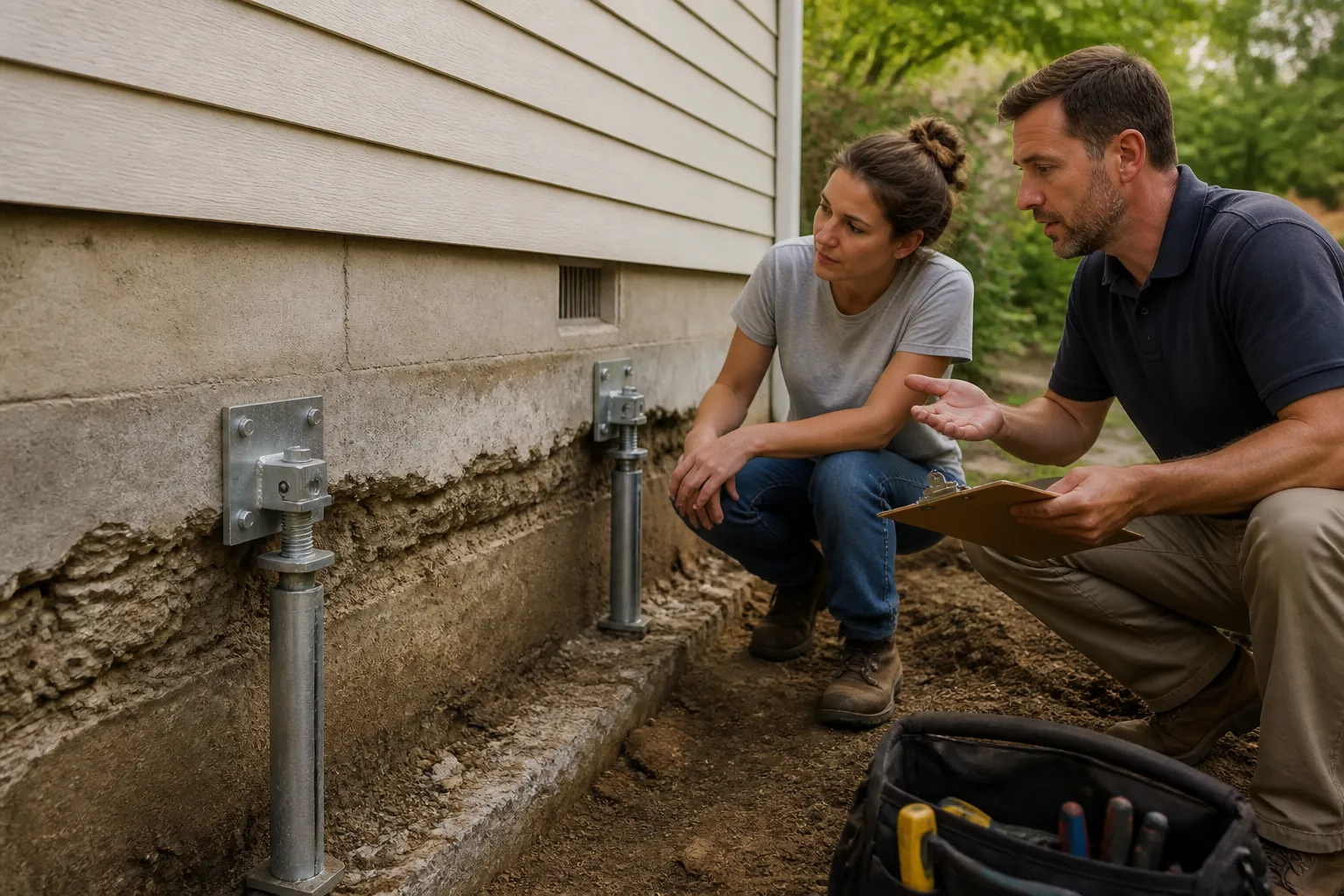
Get Started
Tell us what you are seeing, whether it is a crack, sagging floor, crawl space moisture, or basement water. We will help you understand what may be causing the issue and the next step that makes sense for your property.