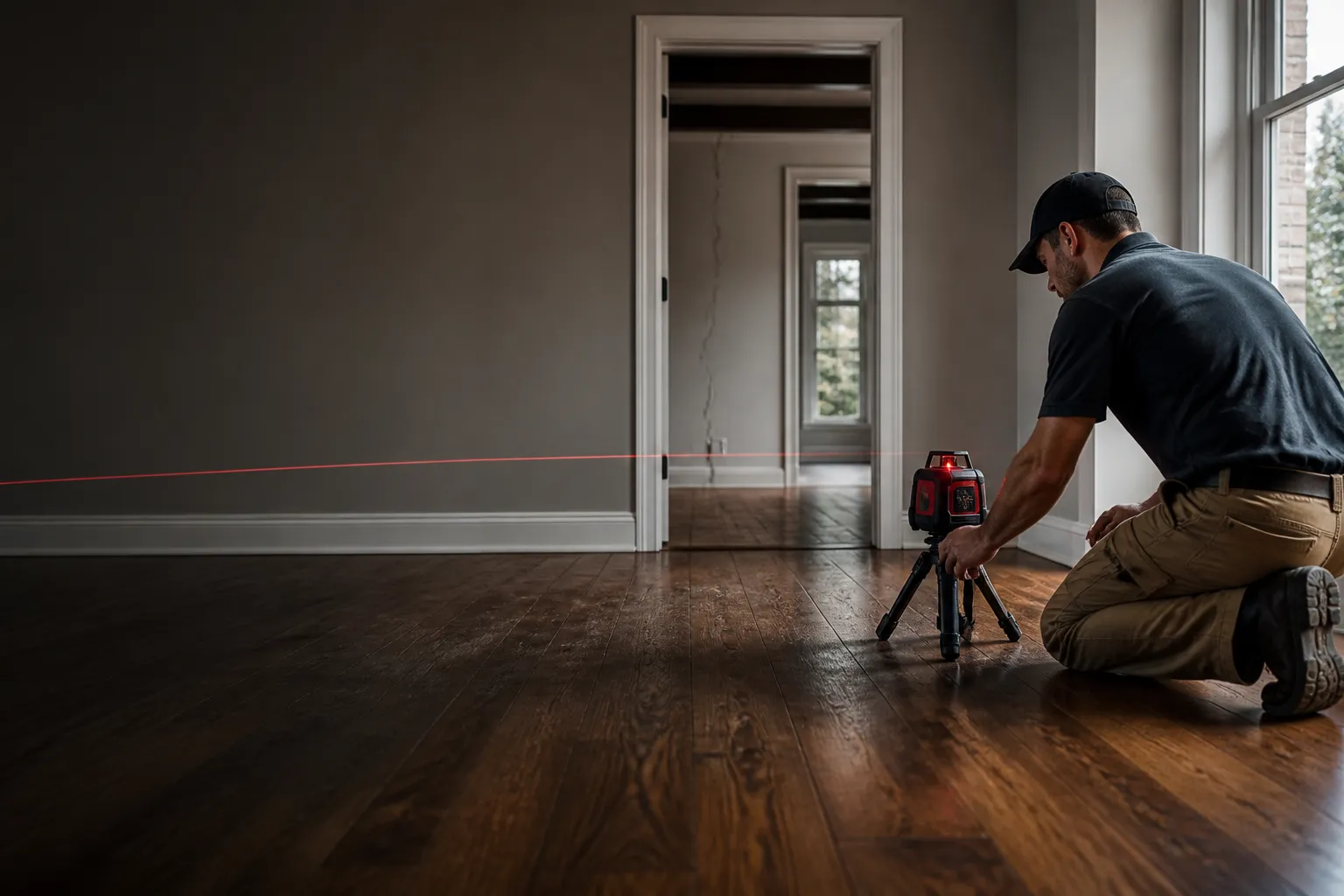
Notice a floor that slopes, a door that sticks, or a crack that seems wider than it used to be? Those changes can point to foundation settling, and they often start small before becoming harder to ignore.
If your Asheville home feels uneven or has begun to show signs of movement, the next step is to have the foundation evaluated and leveled based on what is actually causing the shift. Asheville Solid Foundation Repair helps identify whether the issue is settlement, support loss, or another structural concern, then recommends a practical fix for the property.
Foundation leveling is often requested after a homeowner notices changes that affect everyday use of the house. Some signs are obvious, while others are easy to overlook until they begin stacking up.
These symptoms do not always mean the same thing, which is why the cause matters. A crack can come from settling, moisture-related soil changes, or a support issue beneath the floor system. That is why a careful inspection is the right starting point.
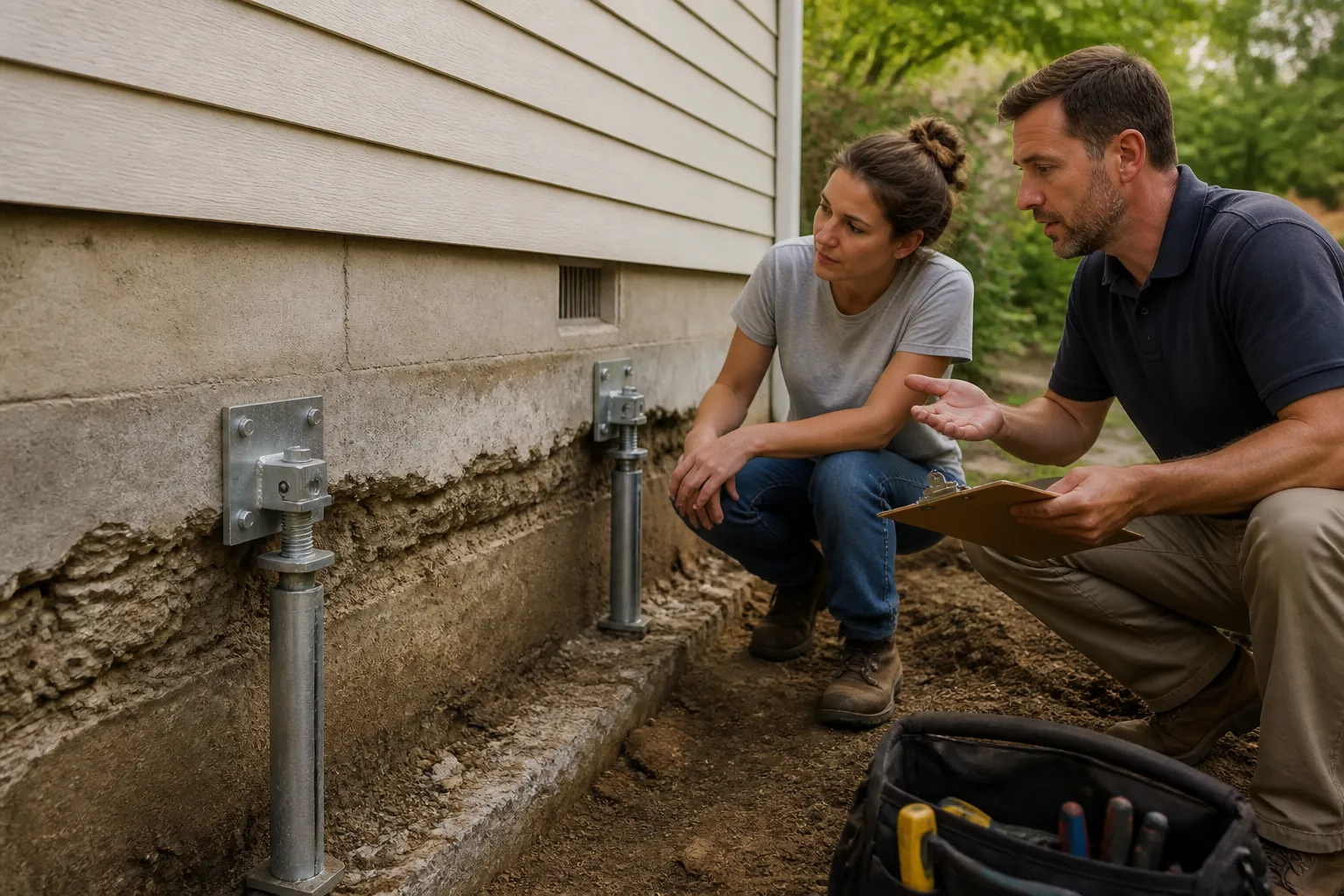
Foundation leveling is meant to restore support where parts of the structure have dropped or shifted. The goal is not just to make a floor feel flatter. It is to reduce stress on the structure above and help prevent movement from spreading.
When support is restored, homeowners often notice that doors close more easily, floors feel steadier, and visible signs of strain stop getting worse. Leveling can also reduce the pressure that settlement places on framing, finishes, and connected areas of the home.
Different properties move for different reasons. In many cases, the problem starts when the ground below a section of the home no longer supports the weight evenly. That can lead to a visible dip, crack, or separation inside the house.
Because the cause matters, leveling is usually paired with an inspection. We look for the source of the movement first, then discuss the repair path that makes sense for that foundation condition.
Before any recommendation is made, Asheville Solid Foundation Repair looks at the symptoms and the areas most likely tied to the movement. That helps avoid fixing the wrong thing or overlooking a larger structural pattern.
This inspection process gives you a clearer view of what is happening, rather than a guess based on one crack or one uneven floor.
There is no single answer for every home. The right approach depends on how the structure is built, how much movement has occurred, and whether other problems are contributing to the settlement. For some properties, leveling is part of a larger foundation repair plan. For others, it may be focused on a specific section that has dropped out of line.
When a slab shows settlement, the affected area may feel lower or uneven compared with the rest of the floor. That can create stress at walls, finishes, and transitions between rooms. Slab foundation repair may be needed when the movement is tied to the concrete itself or what is supporting it.
Homes with crawl spaces often show settlement through floor sagging, bounce, or unevenness above the crawl space area. Crawl space repair can be part of the solution when moisture, support wear, or other conditions are affecting the floor structure.
Depending on what we find, leveling may be combined with crawl space waterproofing, crawl space encapsulation, or vapor barrier installation to address the conditions that contributed to the movement.
Once leveling work is complete, the structure should be easier to live with and easier to monitor. You may still see cracks or cosmetic marks that need later attention, but the important part is that the underlying support has been addressed.
After the repair, it is smart to keep an eye on the same areas that first showed symptoms. If cracks stop changing and doors begin to close more smoothly, that is often a sign the movement has been brought under control. If other moisture or support concerns remain, those should be addressed so the problem does not return.
Some homes benefit from related repairs after leveling, especially if the structure has also been affected by water or long-term settlement. Depending on the property, that may include foundation crack repair, concrete repair, basement waterproofing, or foundation waterproofing.
Homeowners often ask when to stop watching a problem and start acting. A good rule is to pay attention when a symptom keeps changing, spreads to another area, or starts affecting daily use of the home.
If one or more of these issues are showing up, a foundation inspection can help determine whether leveling is the right move or whether another repair should come first.
Asheville Solid Foundation Repair focuses on giving property owners a clear explanation of what is happening and what can be done about it. We do not start with a one-size-fits-all fix. We start with the condition of the home and the source of the movement.
That approach helps keep the repair practical. If leveling is needed, we explain where the support has shifted and how the work fits into the bigger structural picture. If another issue is driving the symptoms, we say so and outline the next step. That is especially helpful for Asheville homes where settlement may show up through floors, cracks, or crawl space conditions at the same time.
Uneven floors are often caused by settling, support changes, or movement beneath the structure. The exact cause depends on the building type and where the floor first started to change.
No. Some cracks are cosmetic, while others point to movement below the surface. The pattern, location, and whether the crack continues changing all matter.
Yes, if the door issue is tied to structure movement. When a house settles, framing can shift enough to affect how doors and windows open and close.
Leveling addresses support and settlement, not every source of moisture. If crawl space dampness or basement water is part of the problem, a related waterproofing repair may also be needed.
Signs like sagging floors, moisture, musty conditions, or visible wear under the home can point to crawl space involvement. An inspection can show whether that area is contributing to the settlement.
Because the same symptom can come from different causes. An inspection helps identify whether the issue is a support problem, a moisture-related concern, or another structural condition that needs attention.
Foundation leveling is often needed when a home starts to show signs of movement that affect comfort, appearance, and structural support. In Asheville, Asheville Solid Foundation Repair works with property owners who want a clear answer and a repair plan that matches the condition of the home.
If you are seeing sloping floors, sticking doors, or cracks that seem to be getting worse, it is worth having the foundation checked before the movement spreads. A focused inspection can help you understand what is happening and what level of repair is needed next.
Asheville Solid Foundation Repair
81 Broadway St Ste 201, Asheville, NC 28801
+18283930465
Get Started
Tell us what you are seeing, whether it is a crack, sagging floor, crawl space moisture, or basement water. We will help you understand what may be causing the issue and the next step that makes sense for your property.