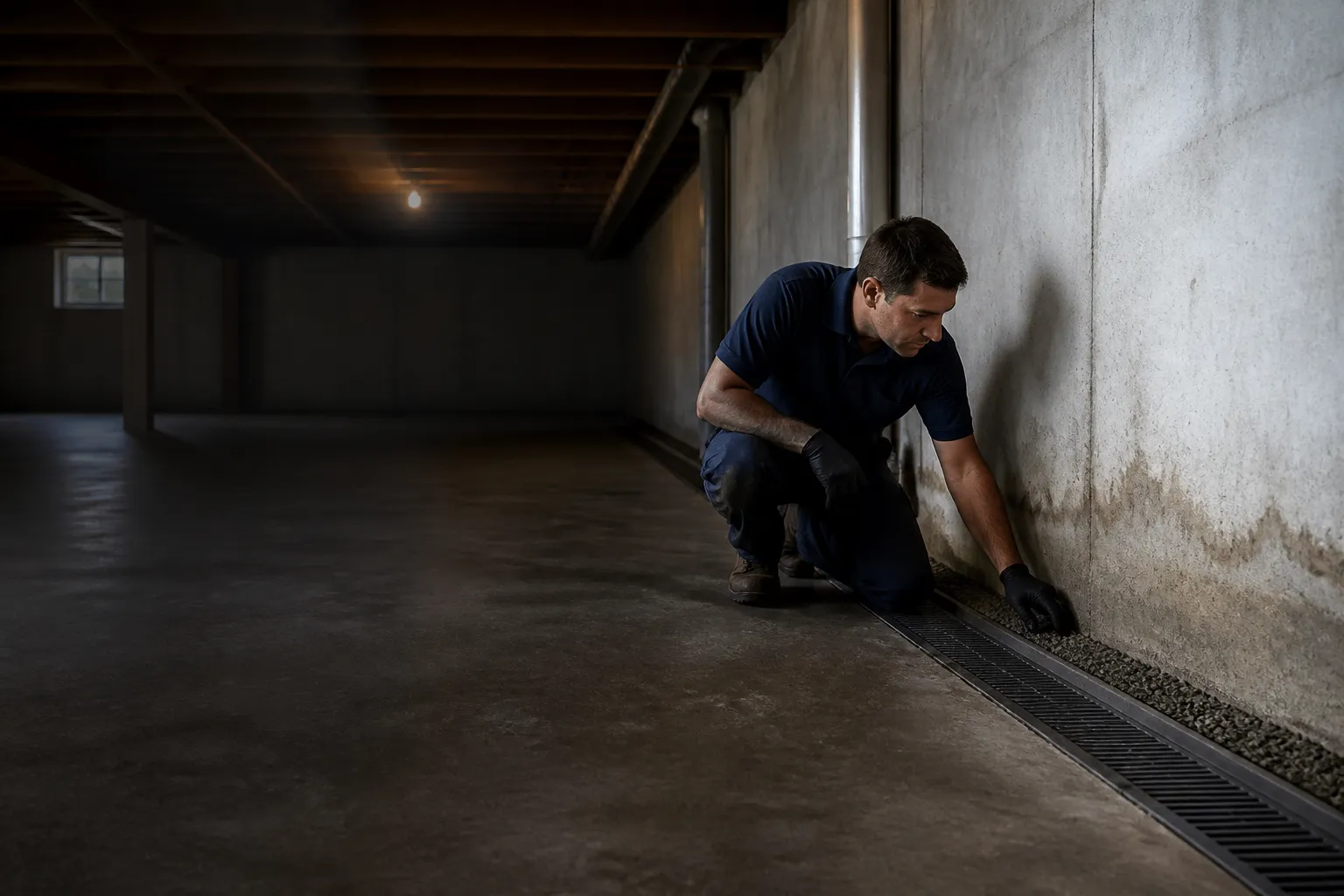
Water where it should not be, a damp smell that keeps coming back, and staining along the lower walls are all signs your basement needs attention. A little seepage can turn into damaged finishes, musty storage, and concerns about what is happening behind the surface.
When you call Asheville Solid Foundation Repair, we start by looking at where the water is entering, what the basement walls and floor are telling us, and whether the issue points to drainage, cracking, or foundation movement. From there, we recommend a practical waterproofing plan for the property, not a one-size-fits-all answer.
Basement water problems often begin with small clues that are easy to overlook. The sooner those clues are addressed, the less likely you are to deal with repeated dampness, damaged materials, or structural strain.
If any of these sound familiar, the next step is not to cover them up. It is to find out how water is entering and what can be done to stop it from returning.
Basement moisture can come from several places, and the source is not always obvious from the inside. A floor may seem dry while water is entering through a crack, a joint, or a pressure point below grade.
Cracks give water a direct path into the basement. Some are small and slow to leak, while others widen as the structure shifts. We look at the crack pattern, location, and moisture signs to determine whether simple sealing is enough or whether a broader repair approach is needed.
When soil around a basement stays wet, moisture can press against walls and floor edges. That pressure often shows up as damp spots, staining, or seepage at the lower portion of the wall.
Pipe penetrations, wall joints, and transitions around the slab can all become weak points. A waterproofing plan needs to address those details, not just the visible surface damage.
Asheville Solid Foundation Repair keeps the process focused on cause and solution. We do not start with a product and force it onto the basement. We start with the condition of the space, then match the waterproofing method to the problem.
We examine the basement for signs of seepage, crack activity, staining, and moisture patterns.
We identify where water is entering and whether the issue is tied to cracks, pressure against the wall, or surface-level gaps.
We recommend a solution based on the basement condition, which may involve foundation crack repair, basement waterproofing, foundation waterproofing, or related concrete repair.
We complete the agreed repair work with attention to the problem areas that matter most for long-term moisture control.
This approach helps avoid chasing symptoms while the actual entry point remains active.
Different basements need different solutions. The right answer depends on where water is entering, how much movement the structure shows, and whether the basement also has concrete damage or crawl space moisture nearby.
This is the core service for keeping water out of the basement space. It is used when seepage, dampness, or recurring water intrusion is affecting walls or floors.
When moisture is tied to the foundation itself, the repair may need to address the structure rather than only the interior surface. That can help reduce repeated water entry and protect the base of the home.
If a crack is the path for water, repairing the crack is a key step. Sealing the visible line without understanding the movement behind it can leave the problem active, so we assess the crack before moving ahead.
Concrete surfaces that are cracked, settled, or uneven may contribute to water collection and intrusion. Repairing or leveling those areas can support a more complete waterproofing plan.
Basement water is more than an inconvenience. It can affect the materials you store, the air quality of the space, and the condition of the structure around it. The longer water is present, the more likely it is to leave behind staining, deterioration, and repeated cleanup.
Moisture can also hide a bigger issue. A crack that seems small today may be showing you where the structure is changing. A damp wall may point to pressure or drainage conditions that deserve a closer look. Addressing the problem early gives you more options and can help protect the property from larger repairs later.
Homeowners often want a straightforward process, and that is what we aim to provide. We keep the conversation centered on what is happening now and what the basement needs next.
If crawl space moisture is also part of the picture, we can look at that too. Basement problems and crawl space problems often connect, and a narrow fix may not be enough if both areas are contributing to dampness.
Some basement calls reveal other water-related concerns that should be addressed alongside the basement itself. Asheville Solid Foundation Repair handles several services that may fit the condition of the property.
Not every project needs all of these services. The point is to match the repair to the actual condition, not to overdo it or leave part of the problem untreated.
We serve Asheville and nearby communities, including Weaverville, Black Mountain, Candler, Fletcher, Arden, Fairview, Swannanoa, Woodfin, Leicester, Hendersonville, Mills River, and Brevard. If you are seeing basement moisture, staining, or crack-related seepage, we can help evaluate the condition and recommend next steps that make sense for the home or building.
Asheville Solid Foundation Repair is located at 81 Broadway St Ste 201, Asheville, NC 28801. Our hours are Monday through Saturday, 8:00 AM to 7:00 PM.
Common first signs include damp walls, staining, a musty odor, white mineral residue, and moisture near the wall-floor edge. Small signs often show up before visible puddling.
Yes. Even a hairline crack can become a path for moisture, especially if water pressure builds against the wall or the crack changes over time.
No. Waterproofing can also be useful when there are recurring damp spots, crack activity, or persistent odor that suggests moisture is already getting into the space.
Yes. We look at both because the visible water may not be the true source. Understanding the pattern helps guide the repair approach.
Then we evaluate whether foundation repair, foundation crack repair, or foundation waterproofing is a better fit for the condition of the property.
Yes. Water and dampness can damage stored items, affect finishes, and create repeating cleanup issues if the source is not addressed.
Get Started
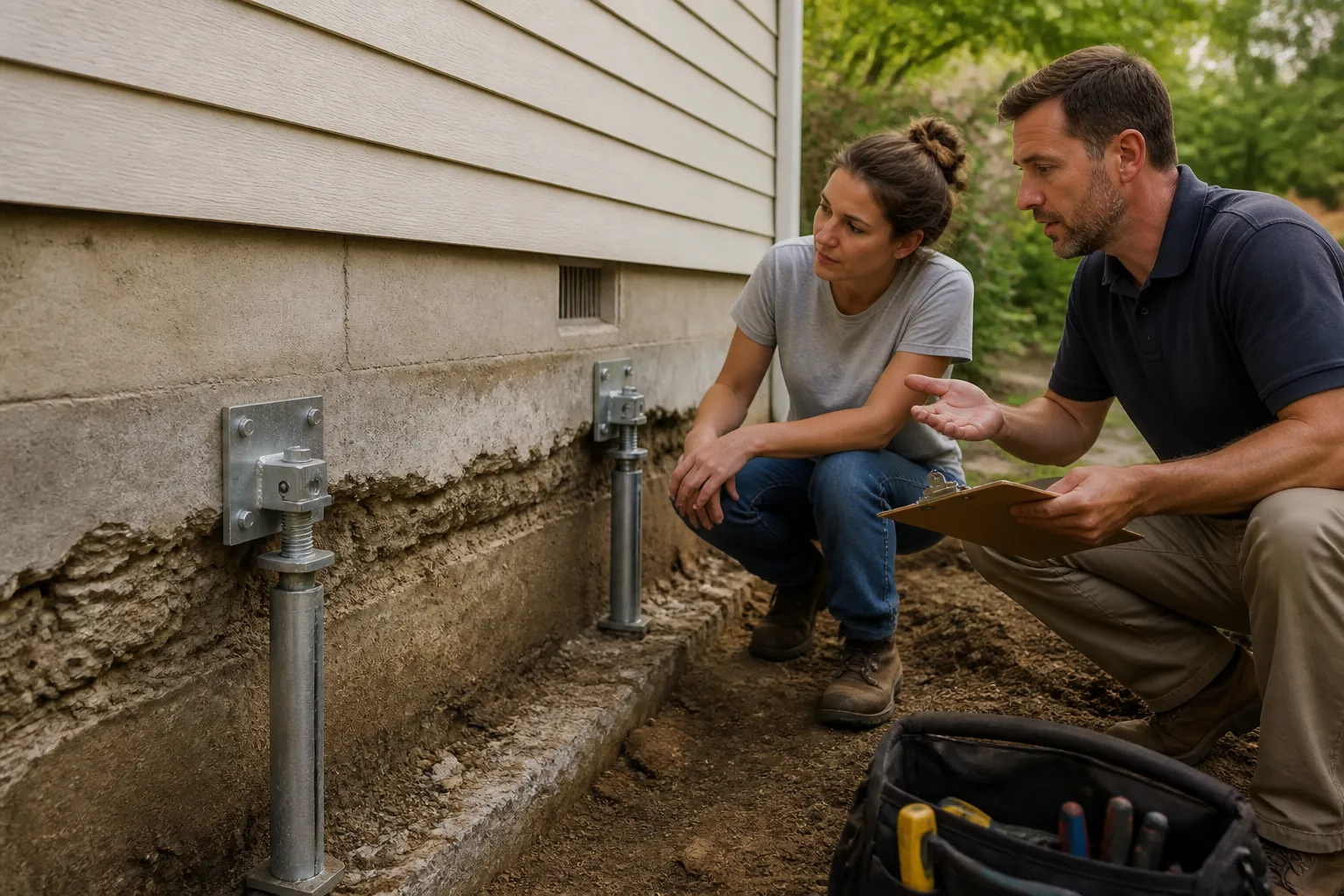
Tell us what you are seeing, whether it is a crack, sagging floor, crawl space moisture, or basement water. We will help you understand what may be causing the issue and the next step that makes sense for your property.