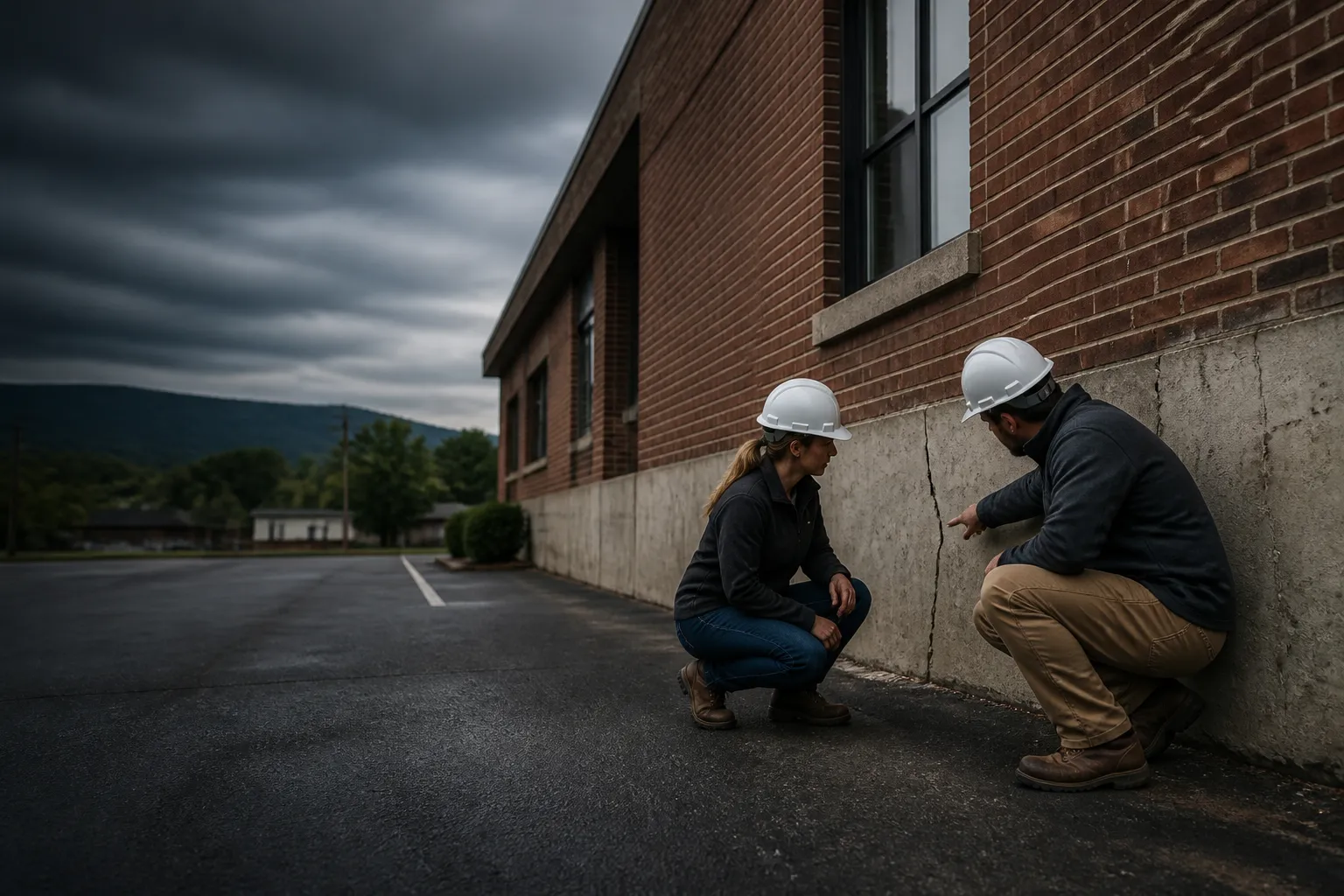
Cracks along a building wall, doors that suddenly stick, or floors that feel uneven can point to a commercial foundation problem that needs attention. When those signs start showing up, the structure is already asking for help, and waiting can make the repair more involved.
For property owners and managers across Asheville, the next step is to get a clear look at what is shifting, settling, or letting moisture move where it should not. Asheville Solid Foundation Repair can inspect the structure, identify the source of the problem, and recommend a practical repair plan based on the building’s condition.
Commercial foundation concerns often start small. A hairline crack may seem minor until it spreads or appears beside other changes. The key is to look for patterns, not just one isolated symptom.
If several of these signs appear together, the structure may be moving rather than showing one cosmetic flaw. That is why a focused inspection matters.
A commercial building can settle for several reasons, and the right repair depends on finding the cause instead of reacting only to the surface damage. We look at how the foundation, concrete, crawl space, or lower-level areas are behaving as a whole.
When one part of a structure settles more than another, cracks and sloping floors can show up inside the building. That movement may be slow, but it often keeps progressing until the underlying support is addressed.
Water intrusion can weaken materials over time and create conditions that lead to crawl space damage, basement water, or deterioration around concrete and foundation elements. Moisture control is often part of the repair plan, not an afterthought.
Slab surfaces, walkways, and other concrete areas can sink or break apart when the base below them changes. Concrete repair and concrete leveling may be needed to reduce trip risks and restore a stable surface.
Commercial foundation repair is not a single service. The solution depends on what the building is showing, where the damage started, and how far the movement has reached. Asheville Solid Foundation Repair offers several related services that can be matched to the structure.
Cracks can allow more than air through the wall. Repairing them can help reduce further opening and limit the path for water intrusion.
When a slab shifts or settles, the surface may become uneven and create visible stress on the building above it.
Leveling is used when the structure has moved enough to affect floors, walls, or openings. The goal is to restore support and reduce stress points.
These services address damaged or uneven concrete surfaces that can affect access, safety, and the look of the property.
Lower-level moisture can create long-term damage if it is left unchecked. Sealing the crawl space helps reduce water intrusion and damp conditions.
These services are often useful when water is entering below grade areas and adding pressure to the structure.
A commercial foundation inspection is about understanding the structure, not just marking cracks. We look for the place where movement begins, how moisture may be involved, and which repair approach fits the building.
We start by listening to what you have noticed. Small details such as when the floor changed, where water appears, or which door is affected can help narrow the source of the problem.
Next, we assess visible damage and surrounding conditions. That can include cracks, slab changes, crawl space moisture, basement water, or signs of structural stress.
After the inspection, we explain what is likely driving the movement and discuss repair options that match the property. The goal is a practical path forward, not a one-size-fits-all answer.
Many commercial properties have lower-level spaces that affect the condition of the structure above them. When moisture collects below the building, it can create damage that spreads into the rest of the property.
Crawl space repair, crawl space encapsulation, crawl space waterproofing, and crawl space vapor barrier installation can help reduce dampness, limit exposure, and support a drier underbuilding environment. Those services are especially useful when the crawl space is contributing to mold-like odors, wood damage, or recurring water problems.
Encapsulation is worth considering when the crawl space needs a stronger barrier against ground moisture and humid conditions. It can make the area easier to manage and protect nearby structural materials from long-term exposure.
Basement water is not just a nuisance for storage space. It can signal pressure around the foundation or a path for water that should not be there. Once moisture reaches a basement, it may lead to cracks, staining, or worsening structural conditions.
Basement waterproofing and foundation waterproofing can help reduce intrusion and support the building’s lower level. If water is showing up again and again, it is worth looking at the foundation itself rather than treating only the visible moisture.
Commercial foundation problems can affect more than one room or one surface. A shifting structure can influence entrances, floor surfaces, interior finishes, and lower-level areas across the property. That is why commercial foundation repair often involves both structural correction and moisture control.
At Asheville Solid Foundation Repair, we focus on the condition of the building and the way the damage is presenting. A warehouse floor, retail space, office property, or mixed-use building may need a different solution depending on the structure and the symptoms seen onsite.
When you contact Asheville Solid Foundation Repair, you can expect a straightforward process centered on the building’s condition. We examine what is happening, explain what may be causing it, and talk through repair options that fit the structure.
The address is 81 Broadway St Ste 201, Asheville, NC 28801, and our hours run Monday through Saturday from 8:00 AM to 7:00 PM. If you are seeing foundation cracks, uneven floors, crawl space moisture, or basement water, it is a good time to have the property reviewed before the damage spreads further.
A cosmetic crack may stay stable and isolated, while a foundation issue often comes with other signs such as floor movement, sticking doors, or water intrusion. Looking at the full pattern helps separate surface damage from structural movement.
Yes. A slab can shift because of soil movement, support changes, or long-term settlement even when water is not obvious. That is why concrete repair and foundation leveling may be relevant even without standing water.
When part of a structure settles or tilts, openings can shift out of alignment. Doors and frames are often among the first places people notice movement because they depend on a stable shape around them.
It can be. Moisture under the building may weaken materials, add pressure, and contribute to conditions that affect the structure above. Crawl space waterproofing and vapor barrier installation are often part of reducing that impact.
Changes in water appearance can still point to a foundation or drainage-related problem. Even if the moisture seems intermittent, it should be checked because repeated exposure can lead to more damage over time.
The answer depends on where the movement starts. A careful inspection helps determine whether the issue is mainly concrete damage, lower-level moisture, slab settlement, or broader foundation movement, so the repair plan matches the actual cause.
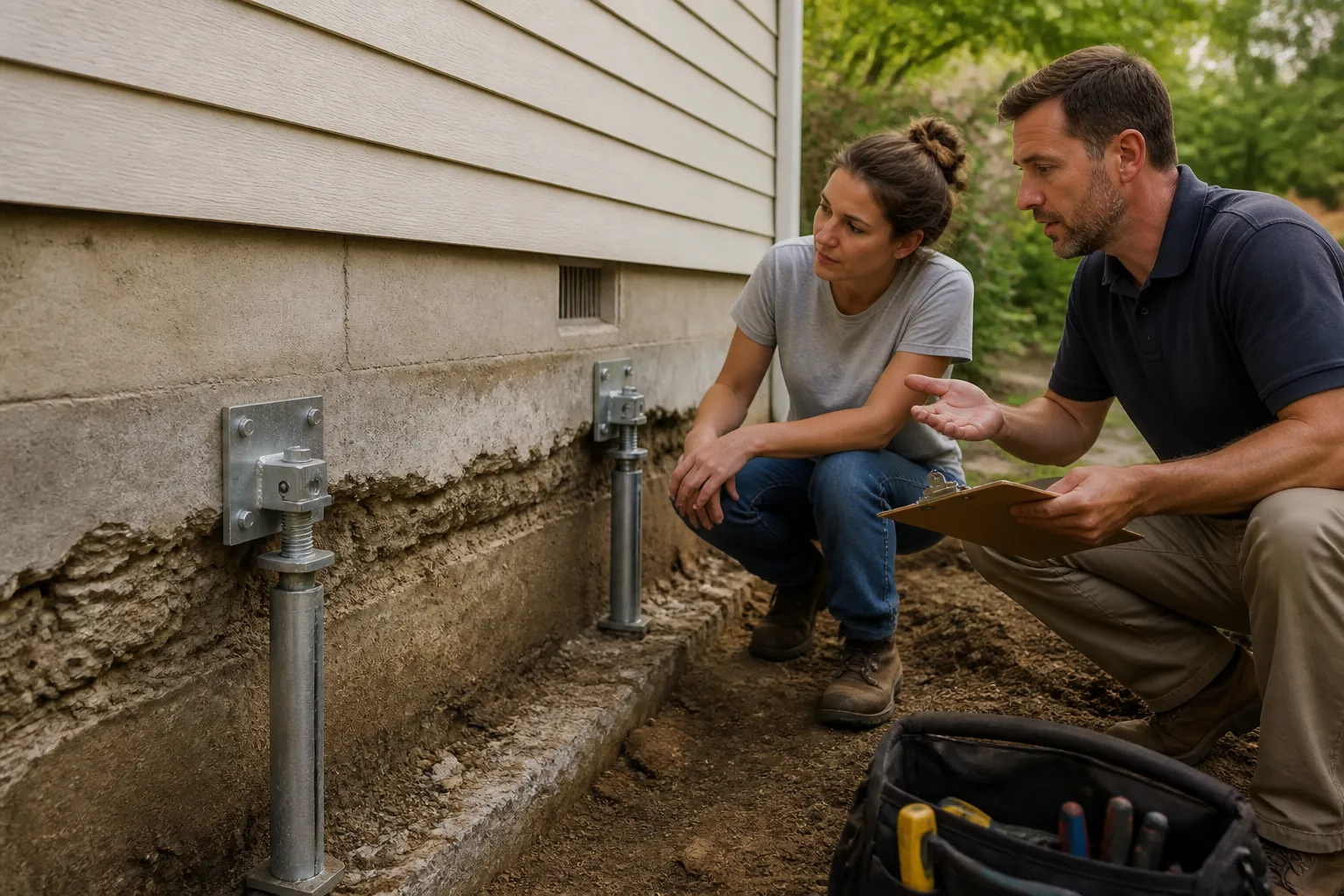
Get Started
Tell us what you are seeing, whether it is a crack, sagging floor, crawl space moisture, or basement water. We will help you understand what may be causing the issue and the next step that makes sense for your property.