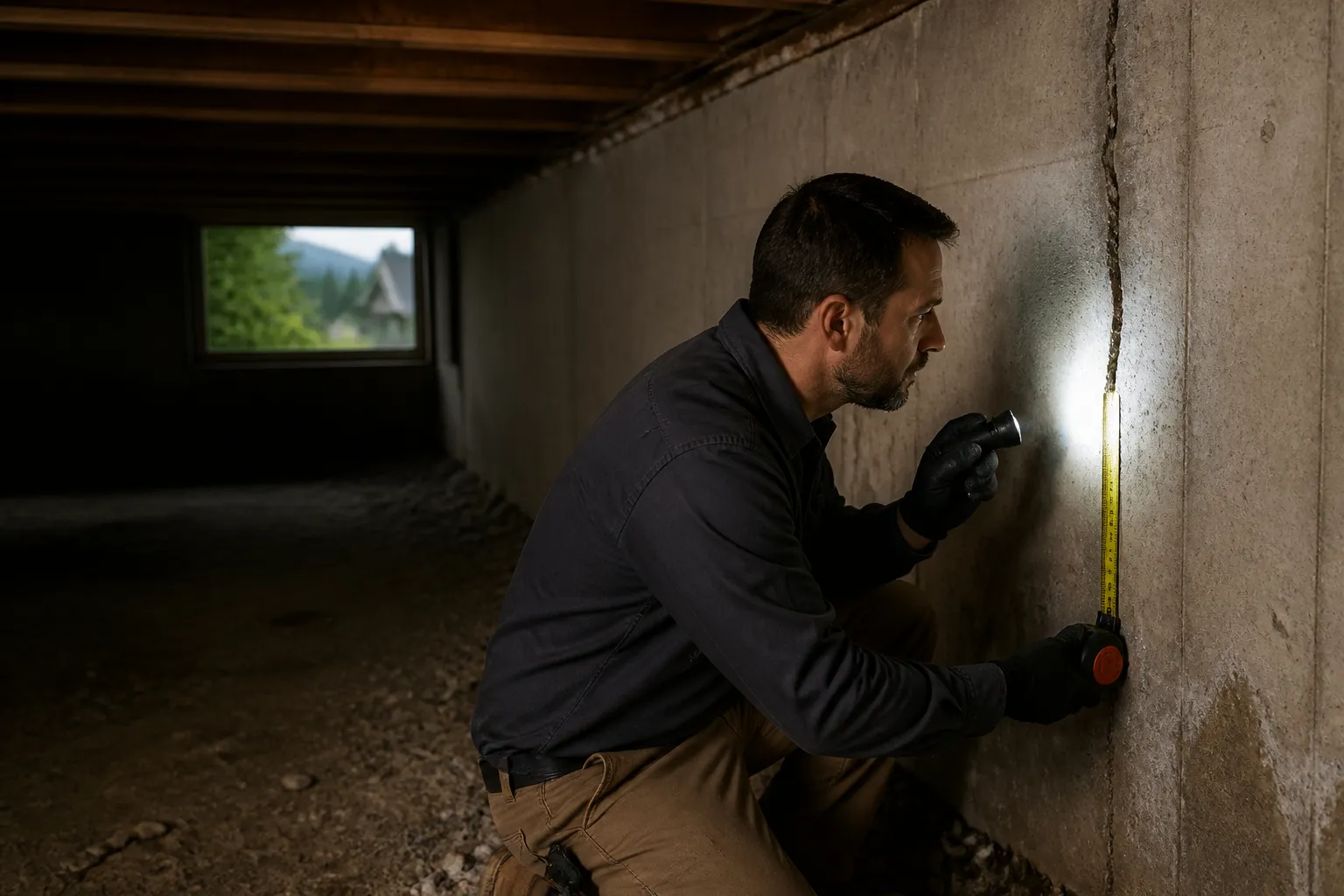
A crack along the foundation can be easy to ignore at first, especially when it starts small or seems cosmetic. Then the signs add up: a widening line, a stair-step break, a damp spot near the wall, or a door that no longer closes the way it should. Those changes often point to movement that should be checked sooner rather than later.
At Asheville Solid Foundation Repair, we look at the crack, the surrounding structure, and what may be causing it so you can make a practical next step. If you have noticed cracking along a wall, slab, or foundation stem, we can inspect the area and recommend a repair approach suited to the condition of the property.
Not every foundation crack means the same thing. Some openings stay stable for years, while others grow because the structure is settling, shifting, or taking on moisture. The details around the crack matter just as much as the crack itself.
When these signs appear together, the crack is often part of a larger problem rather than an isolated blemish.
Foundation cracks can develop for a few different reasons, and the right repair depends on understanding the cause before covering the symptom. A crack that comes from settlement should not be treated the same way as a crack tied to water pressure or concrete shrinkage.
As the soil beneath a structure shifts or compresses, the foundation can move with it. That movement can create cracks, separation, and uneven support that may continue if the cause is not addressed.
Water around a foundation can place pressure on concrete and block walls. When moisture builds up, cracks may open, widen, or begin to leak. In some cases, the crack is only part of the problem and waterproofing may also need attention.
Concrete can crack as it cures or responds to temperature change, load, and long-term wear. Some stress cracks remain minor, while others reveal a more serious structural concern that should be evaluated.
The right repair method depends on where the crack is located, whether water is entering, and whether the foundation has moved. At Asheville Solid Foundation Repair, we focus on finding a solution that addresses both the visible damage and the underlying cause.
We start by examining the crack itself, the surrounding surface, and nearby signs of movement or moisture.
Next, we look for clues that point to settlement, water intrusion, or structural stress so the repair is based on the actual condition.
Depending on what we find, the solution may involve foundation crack repair, foundation leveling, slab foundation repair, concrete repair, or waterproofing work.
If the crack is tied to moisture, the repair plan may also include basement waterproofing, foundation waterproofing, crawl space waterproofing, or crawl space encapsulation.
This approach helps avoid short-term patching when a deeper structural or moisture issue is still active.
Foundation crack repair should be straightforward for the property owner. You should know what is being checked, what the crack means, and what comes next. We keep the process focused on the condition of the home or building, not on unnecessary work.
We evaluate the crack along with surrounding areas that may show movement, seepage, or stress. That includes nearby floors, walls, slab edges, crawl space areas, or basement surfaces when relevant.
After the inspection, we explain what the crack likely indicates and which repair path makes sense. That may be a targeted crack repair, a structural adjustment, or a moisture-related solution.
We then outline the next steps so you know what will be done and why. The goal is to choose a repair that matches the problem rather than forcing a one-size-fits-all fix.
A crack that leaks or stays damp is doing more than showing movement. It is also creating a pathway for water to enter the structure. Once that happens, repair planning often needs to include moisture control along with the crack itself.
If the crack is connected to a wet basement, a damp crawl space, or recurring seepage, the answer may involve more than sealing concrete. Depending on the property, the repair could also include crawl space repair, crawl space vapor barrier installation, crawl space encapsulation, crawl space waterproofing, basement waterproofing, or foundation waterproofing.
Waterproofing work helps reduce the chance that the crack continues taking on moisture after the surface repair is complete.
Not all cracks appear on the same kind of structure. The repair approach changes depending on whether the issue is at a poured foundation wall, a slab, or another concrete surface tied to the building.
Wall cracks may show pressure from the outside, settlement below, or stress around openings and corners. These often need careful evaluation because the direction and location can reveal a lot about what is happening structurally.
Cracks across a slab can be cosmetic, but they can also point to movement or uneven support below the surface. In those cases, slab foundation repair, concrete repair, or concrete leveling may be part of the solution.
For Asheville property owners, the key is not the crack alone but whether the structure around it has shifted, settled, or begun letting water through.
If you see a foundation crack, the safest next move is to stop guessing and have it looked at. Covering the line with paint or patch material may hide the appearance for a while, but it will not explain why the crack formed.
Here is a practical way to think about it:
If you are searching for help with Foundation Crack Repair in Asheville, Asheville Solid Foundation Repair can assess the damage and explain your options clearly.
We work with homeowners and property owners across Asheville and nearby communities, including Weaverville, Black Mountain, Candler, Fletcher, Arden, Fairview, Swannanoa, Woodfin, Leicester, Hendersonville, Mills River, and Brevard. If your property is showing foundation cracking, our process starts with understanding the condition of the structure and ends with a repair plan that fits the problem.
Our office is located at 81 Broadway St Ste 201, Asheville, NC 28801, and we are available Monday through Saturday from 8:00 AM to 7:00 PM.
A crack is worth checking when it grows, leaks, appears near a corner or opening, or is paired with other changes such as sticking doors or uneven floors.
Yes. Small cracks can stay minor, but they can also be the first visible sign of settlement, pressure, or moisture entry.
No. The right repair depends on whether the crack comes from movement, moisture, or concrete stress. Different causes call for different solutions.
A damp crack usually means water is entering through the opening or collecting nearby. That often requires both crack repair and a waterproofing plan.
Yes. Slab cracks can often be addressed with concrete repair, slab foundation repair, or concrete leveling when movement is part of the problem.
Waiting can be reasonable for a hairline crack that is unchanged, but cracks that widen, leak, or affect doors and floors should be inspected sooner.
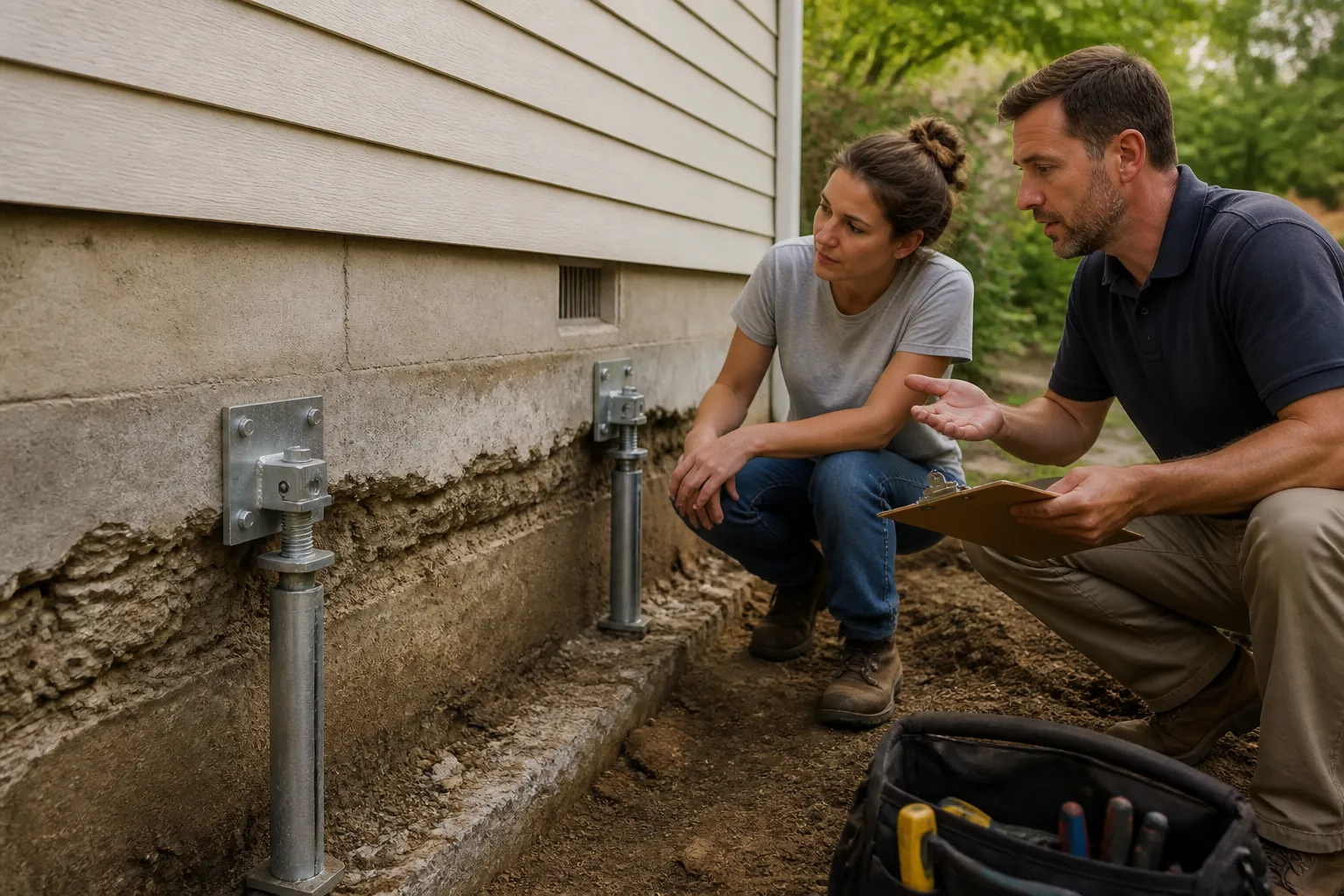
Get Started
Tell us what you are seeing, whether it is a crack, sagging floor, crawl space moisture, or basement water. We will help you understand what may be causing the issue and the next step that makes sense for your property.