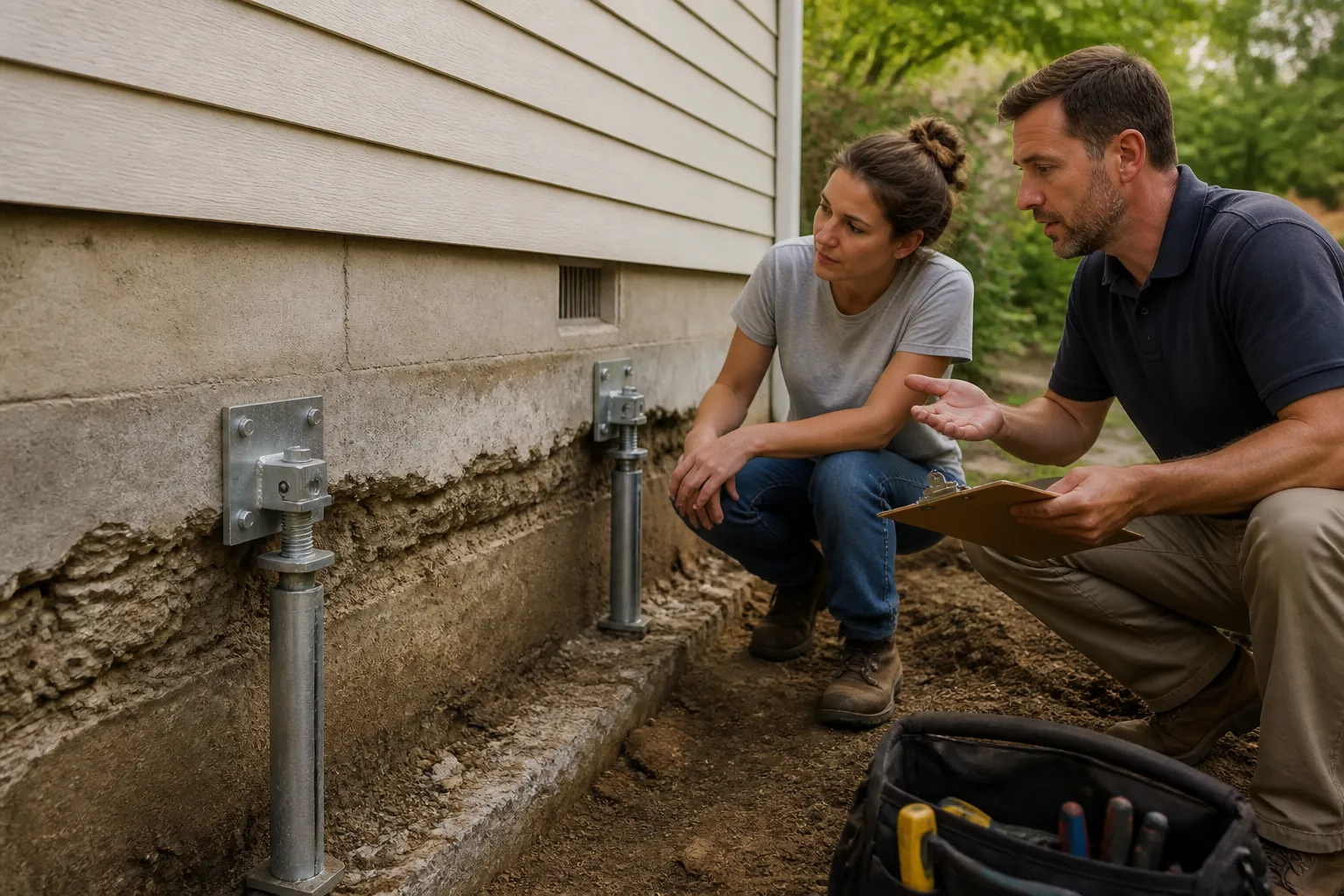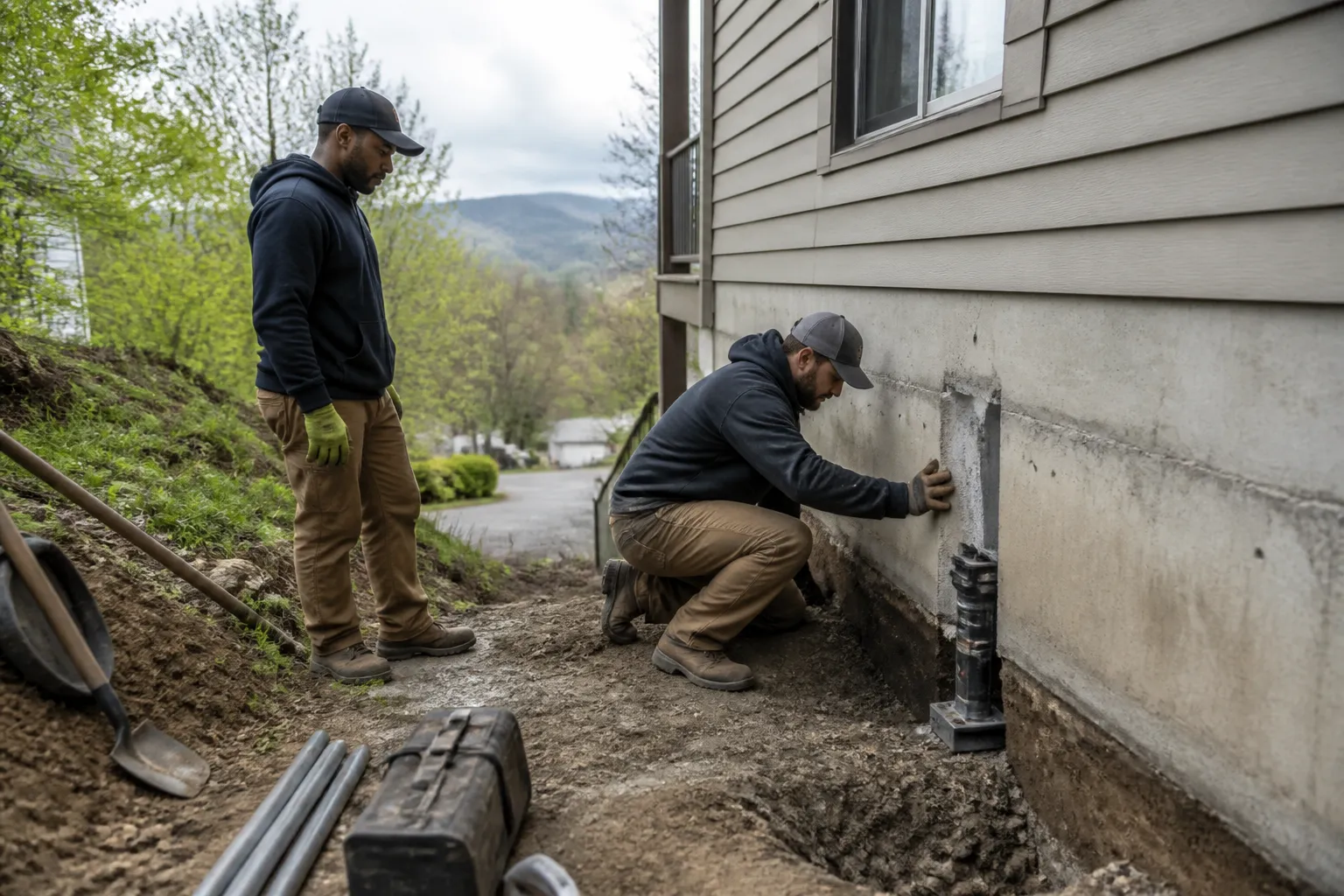
Many Asheville homes have a basement or a lower level cut into a hillside. That design gives you more space, but it also puts walls in contact with wet soil. Asheville Solid Foundation Repair wrote this guide to explain how basement leaks start and how they are fixed.
Asheville gets about 50 inches of rain a year. When soil beside a basement wall stays wet, water looks for any gap to enter.
How basement water gets in
Water enters in a few common ways. It can seep through cracks in the wall, push up at the joint where the floor meets the wall, or come through porous block and concrete. Water pressure in the soil outside is the force that drives it in.
Signs of a leaking basement
Look for damp spots on the wall, white mineral stains, peeling paint, a musty smell, and puddles after rain. Each sign tells you something about how water is getting in.
Outside fixes
Fixing water before it reaches the wall is the best first step. Clean gutters, extend downspouts, and slope soil away from the foundation. Some homes also need an outside drain or a membrane on the wall.
Inside fixes
An interior drain along the base of the wall catches water and moves it to a sump pump, which sends it out of the house. Cracks can be sealed. Our pages on basement waterproofing and foundation crack repair explain these in detail.
Why drainage matters most
A sealed wall without a path for water can still leak, because pressure builds. A drain gives water somewhere to go. On hillside lots, a surface drain uphill can cut the amount of water that reaches the wall.
Mold and air quality
A damp basement can grow mold and raise humidity in the whole house. Waterproofing is the first step. A dehumidifier can help after the leaks are stopped.
Choosing a contractor
Ask what is causing the water, not just what to install. Ask for the plan in plain words. Be careful with any company that gives a full price without looking at your home.
How long fixes last
A fix lasts when it matches the cause. Drains and pumps need power and yearly checks. Sealed cracks should be watched. Gutters and grading need care after storms and leaf fall. A written plan with maintenance steps helps you keep the basement dry.
Questions to ask your inspector
Where is the water coming from? Is it the wall, the floor joint, or the soil? What happens in a power outage if a pump is used? Is a battery backup an option? What is the plan for drainage outside? Clear answers show a company understands your house.
Quick checklist
Check gutters before each rainy season. Test any sump pump by pouring water in the pit. Look for new stains after storms. Keep storage off the floor and away from the walls. Call Asheville Solid Foundation Repair if damp spots keep coming back.
Nearby towns
The same issues appear in Black Mountain, Swannanoa, and Hendersonville, where hillside and creek-side homes often have wet lower levels.
Sump pumps and power outages
A sump pump only helps while it has power. Storms that bring heavy rain can also knock out electricity, which is when basements need the pump most. Test yours a few times a year by pouring water into the pit and watching it start and empty. Ask about a battery backup, and make sure the discharge line sends water well away from the house. Many Asheville homes sit on slopes, so also check that the water does not flow back toward your foundation or onto a neighbor’s lot.
Basements in older homes
Older foundations often have stone or block walls with many joints. These can seep even when no single crack is visible. A good plan looks at the whole wall, the soil outside it, and the drainage around it, not just one spot.
What to do this week
Walk the outside of your house after the next rain. Look for pooling water, full gutters, and downspouts that end too close to the wall. Inside, check basement corners and the base of the walls for dampness or white mineral stains. Take photos and write down the date. Then call for an inspection if anything looks off. It is easier to fix a small leak than a flooded floor.
Related links
- Basement waterproofing
- Foundation waterproofing
- Foundation crack repair
- Black Mountain
- Swannanoa
- Hendersonville
- Why is my crawl space wet in Asheville
Have a wet basement? Call Asheville Solid Foundation Repair at +1-828-393-0465 for a free inspection.